

Advanced Permissions
Learn how to setup more advanced configurations for project access control
Some teams need different levels of access in each environment of a project. For example, a group of developers might need these permissions:
- Write access to the
devandciconfigs. - Read-only access to the
stgconfig. - The ability to see that the
prdconfig exists, without being able to view its secrets.
To set this up, create a custom project role for each access level. Then assign all three roles to the same group, each scoped to its own environments. For background on how roles are scoped and combined, see Environment-scoped roles.
1. Create custom project roles
Create three custom project roles:
- Secret Write: The "View Secrets" and "Manage Secrets" permissions.
- Secret Read-only: The "View Secrets" permission.
- No Secrets: No permissions.
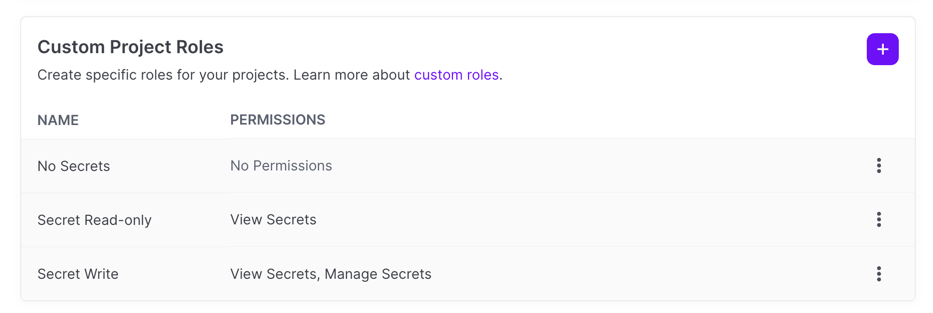
2. Assign the roles to a group
In this example, the group gets access to a project named example that has dev, ci, stg, and prd environments.
-
Open the
exampleproject and click Members. -
In the Add Members area, search for the group, select it, and click Add.
-
In the dialog that opens, set up the following rows. To add a row, click the + button.
Project role Environments Secret Write dev,ciSecret Read-only stgNo Secrets prd -
Click Save.
If the group is already a project member, click the menu next to it and select Manage. Then add the roles in the drawer.
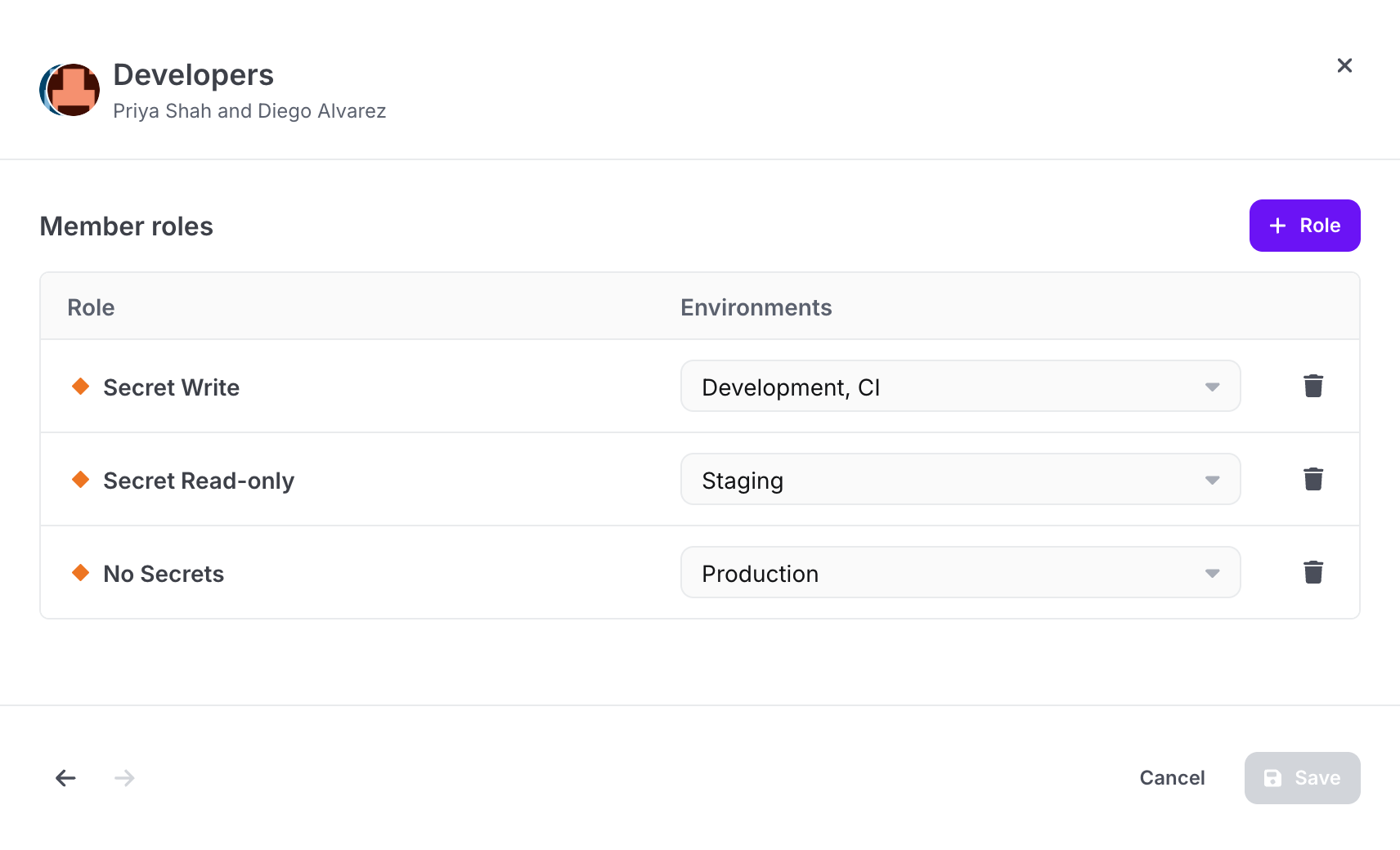
You can assign the same roles to an individual user in the same way, or manage them from the group's page under Team.
3. Inspect project member access
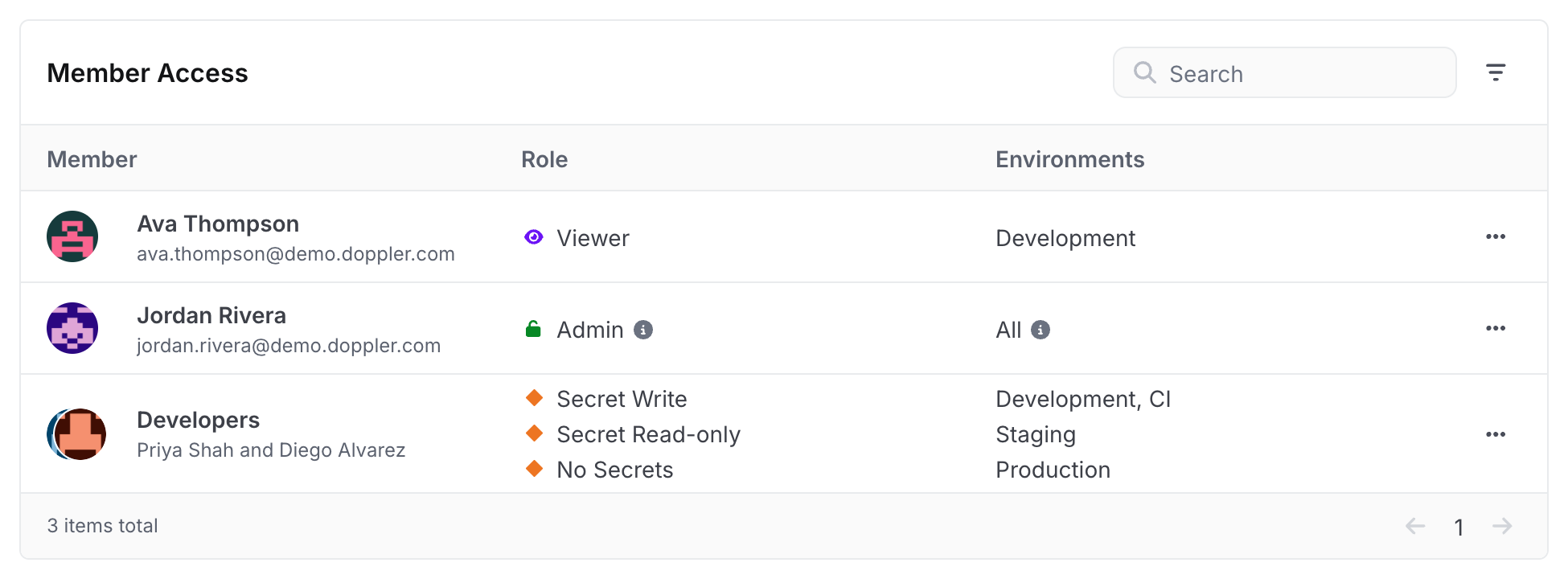
When you're done, the Member Access table on the project's Members page shows the group with one line per role and the environments each role covers.
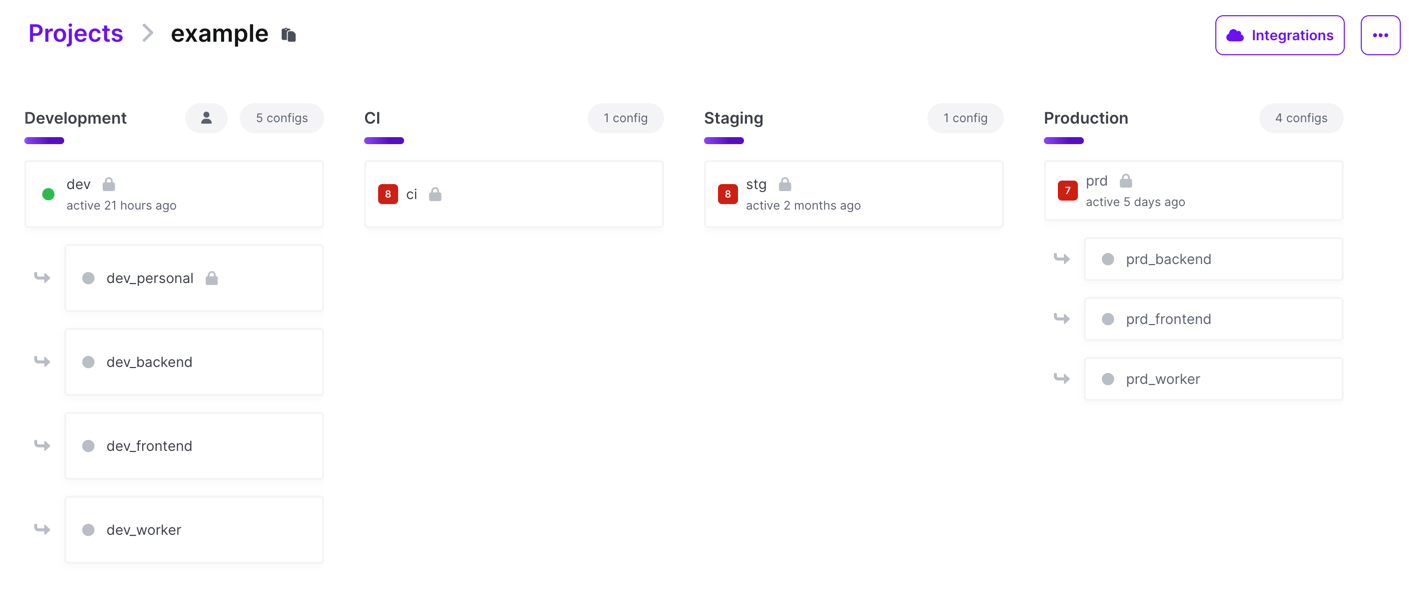
In the project's config view, members of the group see every config they were assigned. They have write access to dev and ci and can view secrets in stg. They can see that prd and its branch configs exist, but they can't open them.
Combine access from several groups
A user's permissions in an environment combine every role that covers it, including roles from each of their groups. Doppler grants the most permissive result. For example, if one of the user's groups has read-only access to a config and another has write access, the user has write access.
Use this behavior when access is naturally owned by different teams. For example, a QA group might grant Viewer on stg while a team group grants Collaborator on dev. When the access levels belong to the same people, assign several roles to one group instead of creating a group for each access level.
Updated 22 days ago